
How Many Ounces Are in a Cup?
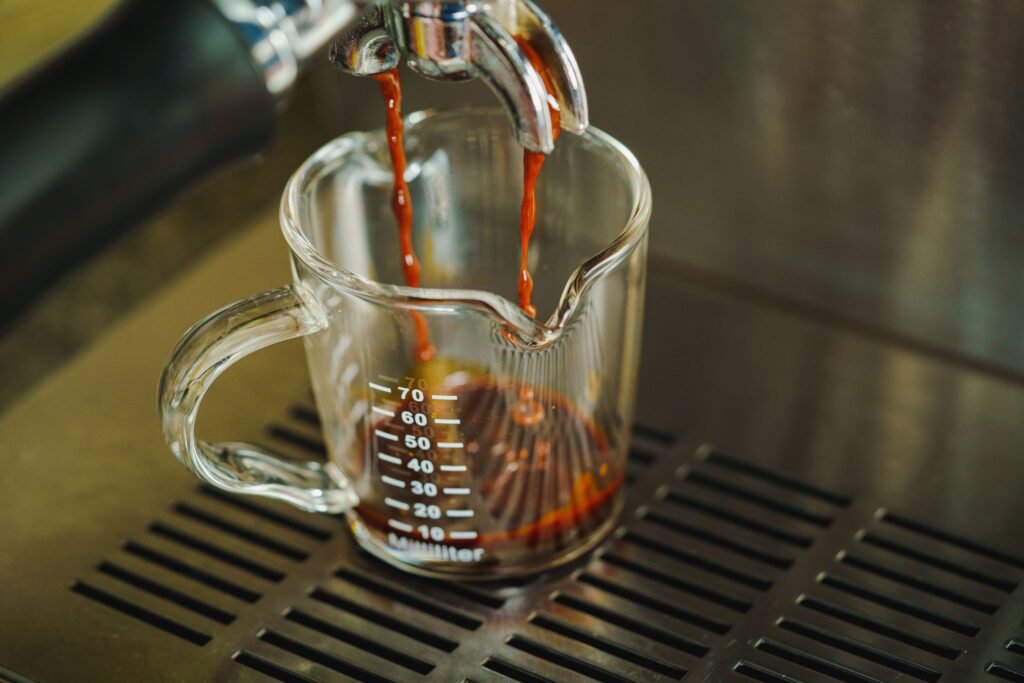
How many ounces are in a cup?” seems like it should have one simple answer, but it actually depends on what you’re measuring. For liquids, it’s fixed and easy: 8 fluid ounces always equals 1 cup. For dry, solid ingredients, there’s no single fixed number — it depends entirely on the ingredient’s density, the same way a cup of flour and a cup of honey weigh completely different amounts.
Below, we’ll cover both cases clearly, with a full conversion chart for liquids and an ingredient-specific breakdown for dry ounces, so you’re not stuck with a one-size-fits-all number that doesn’t actually hold up for every ingredient.
The Quick Answer
For liquids: 8 fluid ounces = 1 cup. This is fixed for any liquid — water, milk, oil, juice.
For dry ingredients: it depends on what you’re measuring. A cup of flour weighs about 4.4 dry ounces, while a cup of honey weighs closer to 12 dry ounces — because dry ounces measure weight, and different ingredients pack differently into the same cup.
Fluid: 8 fl oz = 1 cup — Dry: varies by ingredient
Visual Breakdown
What Is an Ounce?
An ounce refers to two different kinds of measurement(Ounces Are in a Cup). A fluid ounce (fl oz) measures volume — 1 US fluid ounce equals about 29.57 mL, and 8 fluid ounces make up 1 cup. A dry ounce (oz) measures weight — equal to 28.35 grams — used for solid ingredients like flour, sugar, or meat. The US and a small number of other countries use ounces regularly; most of the rest of the world measures weight in grams instead.
What Is a Cup?
A cup is a unit of volume used constantly in cooking and baking. In the US customary system, 1 cup equals 8 fluid ounces, 16 tablespoons, or about 236.6 milliliters. Cup sizes aren’t identical everywhere(Ounces Are in a Cup), though — a metric cup (used in the UK, Australia, and parts of Europe) is slightly larger at 250 mL. For most home recipes, the difference is small enough not to matter, but it’s worth knowing if you’re converting a recipe from outside the US. Ounces Are in a Cup
Fluid Ounces to Cups Conversion Chart
Since 1 cup always equals 8 fluid ounces, this chart applies to any liquid ingredient.
Dry Ounces to Cups — Why There’s No Single Answer
This is where a lot of conversion charts oversimplify things. You’ll often see a blanket claim like “1 cup = 4.5 dry ounces,” but that’s really only close to accurate for one specific ingredient (flour) — it’s not a universal rule. Since dry ounces measure weight and a cup measures volume, the true conversion depends entirely on how dense the ingredient is.
Notice the range — from about 3.2 dry ounces (rolled oats) to nearly 12 dry ounces (honey), all in the same size cup. That’s a big enough spread that a single blanket number would be seriously wrong for most ingredients. For an accurate dry-ounce conversion, always check the specific ingredient rather than relying on a generic rule of thumb.
US vs. UK Measuring Cups
The difference between US and UK measuring cups is small enough that it rarely matters for everyday cooking, but it’s useful to know it exists. A US cup is about 236.6 mL, while a UK (and general metric) cup is 250 mL — a difference of roughly 6%. For most recipes, this gap won’t noticeably change the outcome, but for precise baking, it’s worth checking which system a recipe was written in if the source isn’t clearly labeled and that will make your Ounces Are in a Cup .
How to Measure Accurately
For Liquid Ingredients
- Place the measuring cup on a flat, level surface before pouring.
- Check the fill line at eye level, not from above — looking down can make the liquid appear higher than it actually is.
- Pour slowly near the target line to avoid overshooting.
For Dry Ingredients
- Loosen the ingredient first — sift or lightly whisk flour or powdered sugar to remove clumps before measuring.
- Spoon the ingredient into the cup rather than scooping directly from the container, which can compact it and throw off the measurement.
- Level it off with the flat edge of a knife once the cup is full, rather than packing it down (unless the recipe specifically calls for a “packed” measurement, as with brown sugar).
Why Ounces and Cups Aren’t Always Straightforward
Part of the confusion around this conversion comes from the word “ounce” doing double duty. Historically, the ounce was defined based on the weight of a specific volume of water — which is close enough that 1 fluid ounce of water weighs almost exactly 1 dry ounce. That near-equivalence, true only for water, is likely why the same word ended up describing both a volume measurement and a weight measurement in the first place.
The moment you move away from water to a denser or lighter ingredient, that neat overlap breaks down. A cup of honey is much heavier than a cup of water, while a cup of oats is much lighter — even though both still occupy the exact same 8 fluid ounces of space(Ounces Are in a Cup). This is exactly why professional bakers favor weighing dry ingredients on a scale rather than trusting a “cup” measurement to be consistent: a cup is a fixed volume, but the weight inside that volume is never fixed across ingredients.
If you take away one thing from this guide, let it be this: always check whether a recipe means fluid ounces (volume) or dry ounces (weight) before converting(Ounces Are in a Cup), and for dry ingredients, use the ingredient-specific chart above rather than a single blanket number.